There’s a great deal of excitement and preparation for the Olympic Games, which will come to Los Angeles and Oklahoma City in 2028. Those of us in Oklahoma City are thrilled to host two events on behalf of LA28, softball and canoe slalom. If you are a business owner in one of these cities, you may be thinking, “How can I capitalize on the Olympic Games coming to my city?” This is the first of several helpful articles in which we will walk you through the myriad of legal issues and opportunities associated with hosting the Olympic Games.
Let’s talk about trademarks. Perhaps it’s obvious that a business should not engage in commercial use of the iconic, five interlocking rings, names and slogans (e.g., TEAM USA, ROAD TO LA), and city-specific Olympic logos or mascots. These valuable branding assets are protected by federal and state trademark law and serve as source-identifiers of the U.S. Olympic and Paralympic Committee (USOPC).
The USOPC is a federally chartered corporation that receives zero funding from the U.S. government and is responsible for training, funding, and sending Team USA to the Olympic and Paralympic Games every two years. Thus, the USOPC’s trademarks help generate revenue to support the games and their athletes. The Olympic Games – no doubt – is a commercial activity, and granting U.S. companies permission to use USOPC’s trademarks in exchange for a fee can generate millions and makes the games possible.
For example, the USOPC owns hundreds of applications and registered trademarks in the U.S. for use with a variety of products and services. Federal trademark registration is costly and involves complex legal strategies to develop a solid and enforceable portfolio. In connection with the LA games alone, the USOPC has applied for (and in most cases already secured) at least 15 separate trademark assets for federal registration – including the wording “LA28,” “LA 2028,” and “LOS ANGELES 2028” in any style, color, and font, and in specific stylizations, such as:
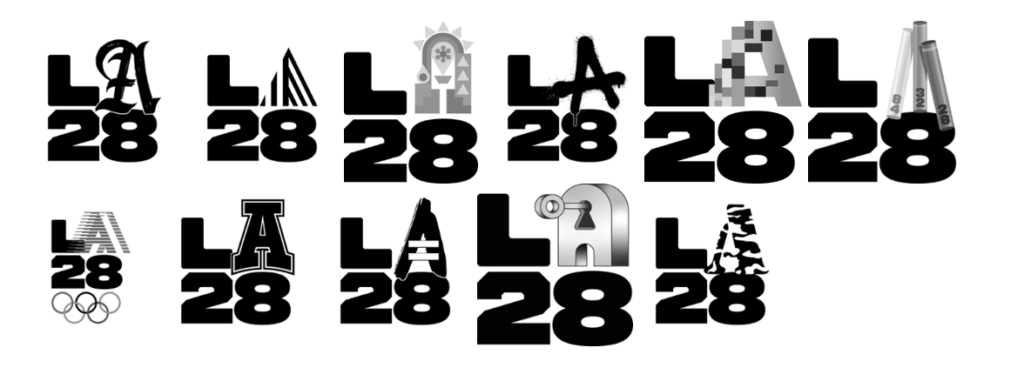
These trademark registrations cover not just sports entertainment services, but also pins, jewelry, mugs, bags, clothing, toys, and sporting equipment, and a laundry list of products.
Moreover, both the International Olympic Committee (IOC) and the USOPC have strict guidelines on the usage of their intellectual property. A good overview of protected USOPC intellectual property is available here.
So, what’s the risk with using these items? Trademark owners with strict guidelines like those of the USOPC typcially mean business and will not tolerate unauthorized use of their trademarks. Trademark infringement occurs when a third party uses a brand name, slogan, or logo in connection with the sale of products or services in a way that would likely cause confusion as to the origin, affiliation, relationship, or sponsorship with a trademark owner’s products and services. Trademark owners are entitled to injunctive relief and monetary damages for unauthorized use. Injuctive relief means the trademark owner can make you stop, and damages means they can make you pay.
Trademark owners are often entitled to unpaid license fees or royalties. More specifically, the Ted Stevens Olympic and Amateur Sports Act,1 grants the USOPC the exclusive right to commercially exploit marks and symbols related to the Olympics in the U.S., such as the five interlocking rings, the word “Olympic,” and any word, symbol, or other indicator representing an association with the USOPC. The general rule: avoid anything that is likely to suggest a relationship between your business and the USOPC or IOC that does not exist.
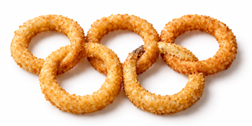
The most famous Olympics logo is the interlocking five rings. Be wary of using them commercially without a license agreement. So, if you own and operate a burger restaurant near Olympic venues, you may want to think twice before selling tasty, but unendorsed, deep fried “Olympic rings” or risk receiving an “Olympic-sized” cease and desist letter.
The term “OLYMPIC” is also protected and federally registered for use with several different products and services. You might be thinking, “but why do the Special Olympics use the name?” The answer is simple: they have a license to use the term. If you are of a certain age, you might recall the “Redneck Olympics,” with its cigarette flip and armpit serenade competitions. After receiving a lawsuit threat by the USOPC, the organization hosting the pig roasts and beer drinking games rebranded and continues those intriguing competitions under the name “Redneck Games.” Another organization, S.F. Arts & Athletics held their ground on the Gay Olympic Games, ultimately losing the right to use that name in the U.S. Supreme Court.2
Along with the rings and the name, other protected logos and images, such as the mascot and the motto (Faster, Higher, Stronger – Together, in the original Latin or any language), prevent use of intellectual property belonging to the USOPC without a license agreement.
In addition to the obvious cautions about the use of trademarks like OLYMPIC, LA28 logos, mascots, and the like – businesses should avoid “ambush marketing,” which occurs when companies attempt to associate their products and services with a particular major event without being official sponsors. Ambush marketing can be either intentional or unintentional. Your marketing team needs to be aware that this can also violate the intellectual property rights of the USOPC. Physical or digital placement of graphics showing Olympic competitions or individual athletes all over your restaurant or on your business’s social media could be a form of ambush marketing if your advertising activities lead consumers to believe that you are an official sponsor of the Olympic Games. For example, before the Seoul Olympic Games in 1988, a credit card company ran campaigns that appeared to refer to the event though it was not an official sponsor. This included offering OLYMPIC medals to customers. Ambush marketing can also occur through consistent posting on social media with dedicated hashtags, but feel free to repost official USOPC Olympic Games social media.
Official sponsorships of the Olympic Games are costly, but the eyes of the world will be on the events. History will be made during the LA28 games because naming rights for Olympic venues, both temporary and permanent, will be available. As of December, 2025, Sports Business Journal reported that the LA28 games have already exceeded $2 billion in sponsorships. A list of sponsors for LA28 games is available here. Neither the USOPC nor their official sponsors want the value of those sponsorships to be chipped away through unauthorized use of Olympic marks and imagery.
The same can be said for individual athletes. They have rights of publicity in their name, image, and likeness (NIL) rights and will seek to capitalize on those rights in connection with their athletic prowess and success during Olympic competitions and beyond. Rights of publicity are rooted in state common law and statutory law and are designed to protect individuals (and in some states their estates) from the unauthorized commercial exploitation of their name, image, likeness. For example, Oklahoma recognizes statutory and common law rights of publicity as well as postmortem rights. Athletes residing in Oklahoma have a common law and statutory right to prevent unauthorized commercial use of their photos and names. And several other states have similar common law and/or statutory law. Thus, we suggest steering clear of marketing that includes unauthorized images of athletes or refers to their names, jersey numbers, or similar identifiable attributes.
At this point, you may be thinking, is there a way for my business to show its enthusiasm for the Olympic Games and American athletes? The answer is yes! Your business can freely use American iconography, such as the American flag and a red, white, and blue color scheme. The Library of Congress has a good starting point for patriotic and free-to-use symbols. You can also search for public domain images on other websites.
When others use USOPC intellectual property and Olympic imagery without authorization, partners who invest millions to support the Olympic Games are less willing to continue funding the Olympics. The licensing of intellectual property, along with the broadcast rights for the Olympic Games, provides a substantial revenue stream which ensures financial support to the entire Olympic movement.
This blog was drafted by Allison Garrett and Liz Isaac, attorneys in the Spencer Fane Oklahoma City office. For more information, visit spencerfane.com.
—
1 36 U.S.C. § 220506(a).
2 S.F. Arts & Athletics, Inc. v. USOC, 483 U.S. 522 (1987). The USOC was the predecessor to the USOPC.
Click here to subscribe to Spencer Fane communications to ensure you receive timely updates like this directly in your inbox.